
Counter-Strike 1.6 Wikipedia: History and Technical Mechanics
Last updated: February 5, 2026
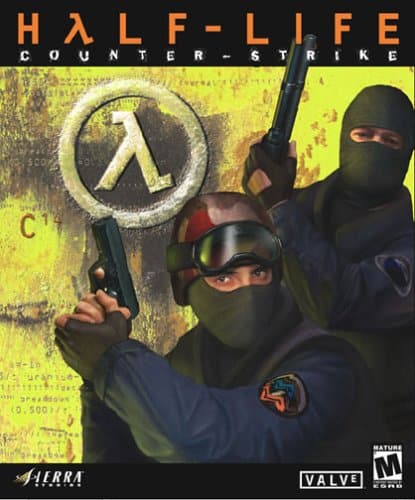
Counter-Strike 1.6 – Encyclopedia
Counter-Strike 1.6 represents the absolute pinnacle of the tactical first-person shooter (FPS) genre. Originally conceived as a total conversion modification for Valve’s Half-Life, it was created by Minh “Gooseman” Le and Jess Cliffe. What began as a passionate community project in 1999 eventually transformed into a standalone global phenomenon that defined a generation of PC gaming. The “1.6” designation refers to the final major content update released alongside the Steam platform in 2003, a version that solidified the game’s mechanics, balance, and competitive integrity for decades to come.
It is essential to understand that this game is more than just software; it is the cornerstone of modern competitive gaming and the precursor to the entire esports industry.
Historical Genesis and the GoldSrc Engine
The technical history of Counter-Strike is inseparable from the GoldSrc engine (Goldsource). This engine was a heavily modified version of the Quake engine, adapted by Valve for the original Half-Life. The shift from “arena shooters” like Doom or Quake—which focused on high-speed verticality and power-up control—to the grounded, objective-based tactical play of Counter-Strike was revolutionary.
The Evolution of the Beta Phases
Between June 1999 and September 2000, Counter-Strike went through numerous “Beta” iterations. Each update introduced features now considered fundamental:
- Beta 1.0: Introduced the basic Terrorist vs. Counter-Terrorist premise with hostage rescue.
- Beta 4.0: Introduced the HE Grenade and the iconic
de_dustmap. - Beta 6.0: Added the AK-47, the M4A1, and the concept of “Assassination” (as_) maps.
- Version 1.0: The retail release that brought the game to the masses under Valve’s banner.
GoldSrc Architecture and Movement Physics
The GoldSrc architecture dictates every interaction within the game world. It utilizes a frame-based physics system, where movement calculations are tied to the game’s internal “ticks.” This architectural choice led to the discovery of unintended but high-skill movement mechanics:
- Bunny Hopping: By perfectly timing jumps the moment a player touches the ground, one can bypass friction and maintain or even gain momentum.
- Strafing and Air Acceleration: Players discovered that manipulating the
sv_airacceleratevariable through rhythmic keyboard and mouse movements allowed for mid-air curving and speed accumulation. - Duck-Spamming: A technique to jitter the player’s hitbox, making them harder to hit while maintaining visibility over obstacles.
- Long Jumping: A highly technical maneuver involving synchronized strafes in mid-air to clear gaps that are normally impossible to jump over.
Technical Gameplay Mechanics
The gameplay of Counter-Strike 1.6 is defined by asymmetric objectives and high-consequence combat. The game operates on a round-based elimination system. Unlike modern “respawn” shooters, 1.6 forces dead players into spectator mode until the next round starts, which fundamentally changes the psychological approach to the game, favoring caution, communication, and strategy over reckless aggression.
Hitboxes and Hit Registration
The game uses a hitbox system—a collection of invisible geometric boxes attached to different bones of the player model.
- Head Hitbox: The smallest but most critical, often resulting in 4x damage.
- Chest and Stomach: Medium damage, with the stomach often taking slightly more damage than the chest in certain armor configurations.
- Limbs: These areas take reduced damage and do not benefit from armor protection.
The technical brilliance of 1.6 lies in its lag compensation and interpolation (ex_interp). The server “rewinds” time to see where a target was from the shooter’s perspective at the moment they clicked, allowing for fair combat even when players have varying latencies (pings).
The Recoil, Spread, and Spray Control
Combat in 1.6 is famous for its difficulty. Every weapon features:
- Recoil (Kick): The physical upward movement of the crosshair.
- Spread (Inaccuracy): The random deviation of bullets from the center.
- Patterns: Unlike modern games where recoil might be random, 1.6 weapons follow specific, learnable paths. Mastering “spray control” requires players to move their mouse in the exact opposite direction of the recoil pattern.
The Global Economy and Financial Strategy
One of the most profound innovations in Counter-Strike 1.6 is the dynamic economy system. Every round is a financial decision. Players start with $800 in the “Pistol Round,” and their wealth fluctuates based on:
- Win/Loss Bonuses: Winning a round grants a significant bonus (approx. $3250-$3500). Losing grants a base bonus that increases with a “loss streak,” helping the trailing team eventually afford competitive gear.
- Objective Rewards: Planting the C4 explosive provides a bonus even if the Terrorists lose the round, which is a vital strategic goal during “Eco Rounds.”
- Kill Incentives: While later versions of the game introduced variable kill rewards, 1.6 focused on a flat reward system that emphasized the objective over individual “frag hunting.”
Objective Scenarios and Map Design Philosophy
Maps in 1.6 are meticulously balanced around “choke points” and “timing.” A map is considered balanced if both teams reach the primary conflict zones at roughly the same time.
Map Prefixes and Goals:
- DE (Bomb Defusal): The core of competitive gaming. The Terrorists must plant a C4 at one of two sites (A or B).
- CS (Hostage Rescue): Focuses on the CTs infiltrating a T-held area.
- AS (Assassination): One player is a VIP with 200 armor. The CTs must escort him to a helicopter.
Legendary Map Lore:
- de_dust2: Known as the most balanced map ever created, its “four-leaf clover” design became the blueprint for almost all tactical shooters.
- de_aztec: Famous for its atmosphere and the “thunder” sound effect that triggers when someone enters the bridge area.
- de_nuke: Notorious for its verticality, where sound cues become tricky.
- de_inferno: Celebrated for its narrow “banana” corridor.
- de_prodigy: A high-tech facility map known for its tight corridors and claustrophobic defensive holds.
Weapons, Equipment, and Ballistics
The weapons of 1.6 are distinct entities with their own “feel” and technical limitations.
Weapon Specialization:
- The AK-47: The symbol of the Terrorist side. It is the only rifle that can kill a helmeted opponent with a single shot to the head.
- The M4A1: The CT’s versatile tool. It features a removable silencer which hides tracer rounds and tightens the recoil pattern.
- The AWP: The “One-Shot, One-Kill” sniper rifle. At $4750, it dictates the “long-range” meta.
- The Desert Eagle: The only pistol capable of a “one-tap” headshot against helmets.
Ballistic Penetration (Wallbanging)
A defining technical feature of the 1.6 engine is wall penetration. Bullets can pass through certain geometry (wooden doors, thin walls, corners) and still deal damage. Knowledge of “spam spots” is a prerequisite for high-level play.
Technical Infrastructure: Servers and Networking
The longevity of Counter-Strike 1.6 is largely attributed to its decentralized server model. The Half-Life Dedicated Server (HLDS) software allowed anyone to host their own community.
Master Server and Browser Architecture
The game’s server browser relies on a Master Server. Community-maintained MasterServers.vdf files ensure players can still find thousands of active global servers today.
Modding and AMX Mod X
The AMX Mod X system is a meta-modding tool that allows server owners to execute custom scripts (plugins). This is how popular mods like Zombie Plague, Jailbreak, and Kreedz (KZ) are created.
Sound Design as a Tactical Tool
In Counter-Strike 1.6, sound is as important as sight. The GoldSrc engine’s spatial audio allows players to pinpoint enemies through walls.
- Footsteps: Different surfaces (metal, wood, water, sand) produce distinct sounds.
- Weapon Reloads: The sound of an enemy reloading can be the cue for a successful push.
- The Defuse Sound: The “click” of a defusal kit triggers a psychological battle.
Competitive Legacy and The Birth of Esports
Counter-Strike 1.6 was the catalyst for the professionalization of gaming. It was the headline title for organizations like:
- CPL (Cyberathlete Professional League): Established the first major global tournaments.
- WCG (World Cyber Games): Often referred to as the “Olympics of Gaming.”
- ESWC (Electronic Sports World Cup): Brought national pride into the competitive arena.
Legendary players like Neo, f0rest, and Potti became household names, proving that FPS games required as much mental fortitude as traditional sports.
Advanced Tactical Utility: The Art of the Grenade
In 1.6, grenades are not just explosives; they are tactical tools that define the “execution” phase of a round.
- The Flashbang: In 1.6, a well-placed flashbang causes a “full whiteout”. “Pop-flashing” is a mandatory skill.
- The Smoke Grenade: In the GoldSrc engine, smoke is rendered as a collection of 2D sprites. This led to “one-way smokes”.
- The HE Grenade: Unlike modern “directional” grenades, 1.6 grenades deal damage in a spherical radius.
Hidden Mechanics and Engine Quirks
Beyond the surface-level gameplay, Counter-Strike 1.6 is filled with technical quirks that players turned into high-level tactics:
- Burst vs. Spray: The “Burst” fire mode on the Glock-18 and Famas was often debated, but skilled players used the Glock’s burst for close-range “jumping” headshots due to a glitch in mid-air accuracy.
- Skybox Glitches: On maps like
de_nuke, players could throw grenades over the “skybox” (the invisible ceiling), allowing for “god-flashes” that were impossible to dodge. - Boost Spots: The collision physics allowed players to stand on each other’s heads. “Stacking” three or four players allowed teams to see over walls that were designed as barriers.
- Russian Walking (Silent Run): By rapidly tapping the crouch key while running (often bound to the mouse wheel), players could move at full speed without making footstep sounds.
The Community Mapping Scene (Hammer Editor)
A major part of the 1.6 encyclopedia is the Valve Hammer Editor. This tool allowed thousands of players to create custom maps:
- Surf Maps: Utilizing the engine’s “ramp” physics, players created sliding courses.
- Deathrun: Obstacle-course maps where one “Terrorist” activates traps.
- Aim Maps: Small, symmetrical arenas designed specifically for reflex and accuracy training.
- FY Maps (Fight Yard): Small maps like
fy_pool_dayorfy_iceworldwhere weapons are scattered on the ground, bypassing the buy system for instant action.
Deep Dive into Server Commands and Variables (Cvars)
The level of control offered by the developer console is unparalleled. Understanding Cvars is essential for anyone running a server or optimizing their client.
- cl_bob: Controls the “bobbing” motion of the weapon as you run. Many professional players set this to 0 to minimize visual distractions.
- cl_weather: A command used to turn off rain (on maps like
de_aztec) to save FPS and improve visibility. - net_graph: A diagnostic tool that shows your FPS, Ping, In (incoming data), and Out (outgoing data). It helps identify “Loss” or “Choke”—two networking issues that can ruin a match.
- sys_ticrate: A server-side command that defines the internal frequency of the server. Setting this to 10000 was a hallmark of high-quality “1000 FPS” servers.
Professional Esports Teams and Eras
To fully understand 1.6, one must study the dynasties that dominated its professional landscape:
- Ninjas in Pyjamas (NiP): The early kings of Sweden, led by Potti and HeatoN. They defined the original “standard” of professional play.
- SK Gaming (2003 Era): Considered the most dominant team in history. Their roster (HeatoN, Potti, fisker, SpawN, Ahl) went on an undefeated streak that is still discussed today.
- Team NoA: The first “international” superteam, featuring players from Norway and the USA, proving that global talent could coexist.
- Fnatic (Late 2.5 Era): Driven by the genius of dsn and cArn, they revolutionized the tactical use of the AWP and utility.
- Natus Vincere (Na’Vi): The 2010 powerhouse from Ukraine. Markeloff, Edward, and Zeus won three major championships in a single year, setting a record for the most successful season in the history of 1.6.
Tactical Depth: “The Default” and “Executes”
High-level 1.6 play is built on the concept of “The Default”—a standard positioning at the start of a round designed to gather information and prevent aggression.
- Default Positions: On
de_dust2, a standard CT default includes one player watching Long, one watching Short/A-Cat, one playing Mid, and two holding B. - The Fake: Because rotations take time, a team might use four grenades at Site A to lure the CTs there, while the bomb carrier sneaks to Site B.
- Split Pushes: Attacking a single site from two different directions simultaneously (e.g., attacking B through the Tunnels and through Mid).
The Evolution of the Anti-Cheat Struggle
Cheating has always been a shadow over 1.6. The game’s reliance on client-side hit registration made it vulnerable.
- VAC (Valve Anti-Cheat): The official system.
- Third-Party Clients: Services like ESEA, FACEIT, and FastCup emerged, offering proprietary anti-cheat drivers that were much more aggressive in scanning memory than VAC.
- OGC and Early Hacks: Names like “OGC” (Open Graphics Library Cheat) became infamous in the early 2000s, leading to a permanent arms race between cheat developers and community admins.
Modern Compatibility and Continued Relevance
Despite its age, the 1.6 community remains vibrant. Playing today on Windows 10 or 11 requires a few technical adjustments:
- OpenGL Renderer: Essential for proper graphical rendering.
- Resolution Scaling: While 1.6 was designed for 4:3 CRT monitors, many purists still play at 800×600 for larger player models.
- Netcode Commands: Advanced players still manually configure
rate,cl_cmdrate, andcl_updaterate. - FPS_MAX: The game engine is traditionally capped at 100 FPS. Setting
fps_max 101became a ritual to ensure the smoothest movement and mouse input.
The Cultural Impact and Folklore
Counter-Strike 1.6 isn’t just a game; it’s a testament to the power of community-driven design. It established myths and legends within the gaming world:
- The “1337” Culture: The game popularized “leet speak” and early internet gaming slang.
- Frag Movies: The game’s demo system (
.dem) allowed for the creation of iconic montage videos like “Pubstars” or “SK Believe”. - LAN Culture: For over a decade, 1.6 was the primary reason for the success of internet cafes globally.
- Pro-Player Configs: In the 2000s, downloading the
.cfgfile of a professional player like HeatoN or Spawn was believed to give you their “aim” and settings.
From the shouting matches in internet cafes to the silent intensity of major stadium finals, 1.6 established the DNA of the modern gamer. Its influence is felt in every modern tactical shooter, but the raw, mechanical purity of the 1.6 experience has never been truly replicated.
To download the original game files plus you can see all the available game resources, feel free to use our links. Searching for the original Valve build?